Showing posts with label China. Show all posts

Market Seizure.. Updated!!!


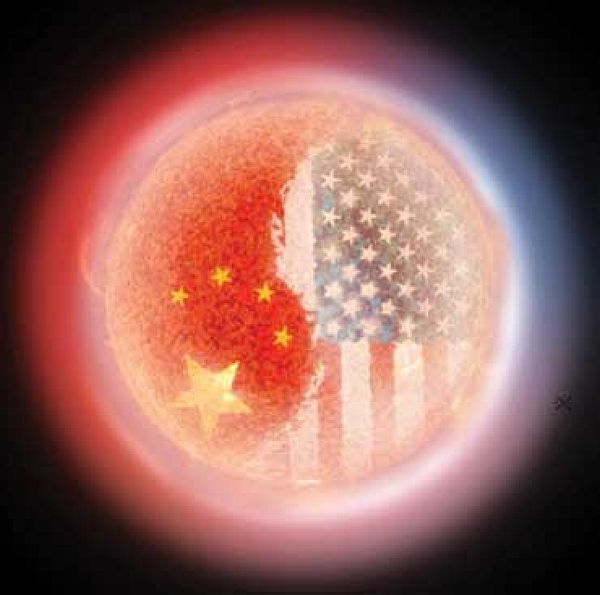
US versus China

When last we looked the United States was putting in unwanted pressure on the Chinese architecture and economy wise tightening their claws to curtail whatever money China was earning.

The reality of the truth well on the other side is that China holds such a huge population and pegging itself t the dollar at a constant value since 2008 it has not got many options to enjoy when price modulation is concerned. More or less whatever margin China gets on the goods that is sold is nothing but a meagre 2 percent. This means that in the United States if the bill is passed and the strong regulations are being applies on the Chinese economy then the exporters would be driven to the ground and the cushioning effect that the China had been downplaying since years would be devastated.

United States has a previous experience of such regulation when it has destroyed foreign economies to give boost to internal production. Something of this sort happened in 1990s around when goods that were imported from Japan were made very costly so that the simultaneous American goods can also become competitive.

As can be seen both the House Democrats and the Republicans are fixed on their point to pass the bill as according to them the curtailment of Chinese hands is an important agenda but time will tell what is bound to happen.

With the American economy completely broke and still waging war in Asia and the Middle East it becomes complicated to trust motives when things do tend to seem otherwise too and China vetoing whatever it can with the 54 African votes in the United Nation against any American imposed restrictions in Iran situation is pretty dim.

The situation however becomes even more gruesome with the sudden ascent of Chermany and not in the most positive way. Speaking of intentions some intentions have still not become clear as what the countries exactly want from the on going crisis that is pulling everyone into it.

This is the third time in a row when the fiscal tightening has forced the masses of the Greece on the streets while on the other side more sophisticated European nations are discussing how to do away with the need to sponsor a bailout for the bankrupt nations.


Germanic Intentions

Mr Schäuble, German finance minister addressed his critics by declaring Greece’s crisis had shown it was “obvious” that the 16-nation eurozone’s rules were “incomplete” and unable to deal with situations long thought “inconceivable”.

His argument comes after days of vigorous debate within Germany, and with other European Union partners, with some questioning the timing of the initiative and others the need for an alternative to the International Monetary Fund.

The Bundesbank, Germany’s national central bank, this week signalled its opposition to any proposal that might distract eurozone governments from the more immediate task of bringing Greece’s public finances under control.

Axel Weber, Bundesbank president, described as “not helpful” discussions about the “institutionalisation of emergency help”, which he said could prove “counterproductive” given that eurozone countries were currently helping Greece.

Greece even though being a paramount question need proper thought is saving it worth the cost for Germany.

If we go by the words of Mr Schäuble there can only be one thing that might come out clear and that would be that Germany is looking at options for a safe exit from Euro zone as far as the currency binding is considered while planning a bailout too.


The Boasters

Chermany as has the name been coined denoted the two of the world’s biggest exporters governing whatever the world eats. China and Germany are, of course, very different from each other. Yet, for all their differences, these countries share some characteristics: they are the largest exporters of manufactures, with China now ahead of Germany, they have massive surpluses of saving over investment; and they have huge trade surpluses.

Both also believe that their customers should keep buying, but stop irresponsible borrowing. Since their surpluses entail others’ deficits, this position is incoherent. Surplus countries have to finance those in deficit. If the stock of debt becomes too big, the debtors will default. If so, the vaunted “savings” of surplus countries will prove to have been illusory: vendor finance becomes, after the fact, open export subsidies.

China is already clawing the possibility of financing every spending of USA but considering the consumption of European Union is considered if Germany were to sponsor Greece bailout or for that matter any other bailout it would choose to leave the Union while doing that or force the weak nations to do so.

The situation is like Germany no longer wants to be associated with its weaker counterparts but seriously wants to help them. It is still playing with its cards till the time when the exact structure of European Union future would be decided for that would decide how the pegging of currencies would occur.

The time is like when financing counterparts is more like making them eat more and in doing so fuelling the market of the country itself. A kind of symbiotic foothold so that the eating and consuming cycle goes on, however this complicated cycle of Euro common currency is restraining countries as they are economically pegged to each other.

More to come.........
Read more

Market Seizure


With the fact clear that Google is coming out of the Chinese market sooner than the financial birdwatchers have forecasted there lays a dense fog on Sino American relationship on what is to happen next. With 400 million Chinese markets still under the assumption that Google is being pushed out of the country because of its vulgar and explicit sexual content the far outcry of heavy censorship is going to affect both Google and Chinese economy as a whole.

With America not in favour of any of what China is pertaining to do and its policies tightening around the dragon’s neck what is next in line is the new bipartisan bill to curb Chinese made imports in the US. China long since mid 2008 kept a constant Yuan to dollar value pegged at a number 6.83 which is causing a lot of problems. With the great slump in the American market and no remuneration for internal American producer from the government due to lack of fund the internal produced goods are not at all competitive in the market.

Chinese goods are highly competitive in the market owing to their cheapness. This cheapness comes from the undervalued Yuan which China has no interest of changing. China hold seventy percent of its foreign reserves in the American treasury Bills hence forth is able to command a constant currency ratio.


Being a communist regime what it does it forcibly brings down the standard of living of the people and dictates their low standard of living there by converting the solid gains and selling the products into foreign exchange reserves. Hence forth it has been able to generate reserves to the tune of ten times what it had in 2003 in the last seven years.

On the other side of the world where that American economy is trying to fight the biggest slump it is being pestered by the Chinese policies which include this constant pegging to the dollar. Internal production is vandalised because of the non competitive China driven market. Only if the China re values its currency and rises it against the dollar then only the internal market would become competitive.

Recently two bills have been brought up in American Congress for the same and most probably would pass. Both of them are pointed to pressurize China to rethink over its decision to increase the value of Yuan against the dollar. First of all there was the Job Bill that is focused at proving new entities with subsidies for opening new business and simultaneously there is this Bipartisan Bill wherein the Republicans and Democrats both are saying to increases taxes on imports from whatever is brought from China.

The consequence of the bipartisan bill is going to be single fold. First of all due to sudden rise in the prices of Chinese goods in the American market the American made internal goods might become competitive in the market and this would give boost internal producers. This bill is going to pressurise the Chinese government to rethink its proposal to continue with its constant pegging on the Dollar or draw a midway with the American counterparts. What is clear that America would not risk the possibility of job creation through this hence it is in favour of increasing the prices of Chinese goods?

But the other part of the story remains that with interest level at near zero and no plan of the American government to alter it is it the right time to bring a costly expensive market to the American consumer. American consumer knows what consumption is but with the slump and whatever small amount of jobs being created would it be viable to introduce this inflationary change.

The situation on the other side of the Atlantic is equivalently gruesome. With Chinese export driven funda there is another country that still stands on the green fields but is feeling the heat of being green. Germany is another mass exporter for whom a constant cheap foreign export is likelihood and the only means of sustenance.

People talk about the rise of the G2 or Chimerica, people talk about the rise of Chindia but now the people are talking about the Chermany, a composite of the world’s biggest net exporters: China, with a forecast current account surplus of $291bn this year and Germany, with a forecast surplus of $187bn.

A just question how America can curtail the hands that feed it. Whatever new bills it applies in the end the situation would revert back to it as controlling the consumption is not a means neither is bring a catapult change in its internal market production. Why is America not thinking that it has no internal market left and if it has to compete with China it will have to do it right from the scratch?

More to come.......


Read more

The Descent of the G-2


The Myth about G-2


Even as Niall Ferguson deciphered the creation of a world economy on the basis of the term Chimerica wherein symbiotically one nation would supplant the needs and demand through its supply and henceforth they would co-exist it was a staggering reality that was bound to take form.


The myth deepened as Obama announced his plans for the creation of a G-2 block last November in coordination with Beijing. One thing has obviously become very clear to everyone that being a superpower America might have enjoyed lots of world hegemony but with the descent of money in the past financial crisis there have been a resurgence of the east and it has caught the vision of every on lookers past the Atlantic from New York to Tokyo that the is always an end.


Everyone is talking and everyone knows- the world economy has entwined itself in such a way that every pawn depends entirely on the movements of these two G-2 countries.


However with the recent list of scandals there have been lots of internal tension that have been generated between the G-2 block and its peaceful co existence kind off looks unlikely. This past winter there have been several events which have struck heavy discord between the two nations.


This winter has been a cold one for China-US relations. So many serious disagreements between the two countries have not surfaced simultaneously for decades: the US is exerting unprecedented pressure on China to revalue the Yuan, a cyber war erupted between Google and the Chinese administration, Washington intends to sell weapons worth $6.4 bn to Taiwan, China dumped US bonds worth $34.2 billion, both sides threaten to introduce punitive import tariffs, and US President B. Obama received 14thDalai Lama Tenzin Gyatso in the White House.


In the past China and the US avoided taking harsh measures against each other serially, but evidently things have changed beyond recognition over the past several months.


Iranian barricade


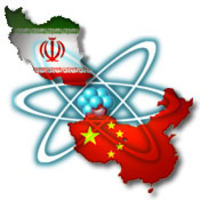
Obama proposed this particular idea of joining hands with the China to sustain the growth that these two blocks could have had if they joined hands however Iran is one of the issues US is not in the right terms with China. China stands in the way of vetoing against whatever NATO and US proposes in the Security Council to wage aggression against Iran.


This support comes up because Iran is China's major commercial and strategic partner. Over 15% of China's oil import (a total of some 450,000 bpd) is supplied by Iran, with only two countries - Angola and the Saudi Arabia - supplying greater amounts. China took two important new steps to boost its cooperation with Iran in the energy sphere in the late 2009.


China's state-owned Sinopec signed a contract with Tehran to develop the first phase of the Yadavaran oil field, one of Iran's largest, and to invest $6.5 billion in the upgrade of Iran's refining capacities. Beijing reckoned it made no sense to scrap the plans in the name of taking the role of a minor partner in the duet with the US. Thus US have still not being able to tame Iran.


Iran appears in the list of countries of unrecognised countries with the likes Of Nigeria, Yemen etc. This list is released by the United States government wherein they have forgotten to put in names of many other undemocratic governments like Columbia or Honduras which have similar rule but are pawns to the Obama regime.


Iran’s reluctance to trade with US and its trading procedure which it has called to be shifted to be on a non dollar currency intensifies the situational imbalance and strains the relationship in the G-2 block.


Revaluation of the Yuan


Even in the time of the slump the American production house is not being able to sell what it produces because the cheap imports from the Chinese economy that the American consumer has so much got addicted to.


The phrase means as literally as simple it seems- America eats what china produces. This is wrong at least for the American industries. There is no real time market left in the US and with the slump whatever they had has been devastated. They had just now got slightly under the two digit job loss percentage but with no reform.


Jobs are going to be created only if there is demand but the demand is eaten away by the Chinese goods produced and the internal situation remains the same. This situation is intensified because China is a communist nation is not increasing the wages of its people. This triggers its economy to be able to produce export so very cheap that buyers have nowhere else to go.


China agreed to a compromise over the issue in 2005 when it set a flexible rate for Yuan synchronized with a pool of currencies, and the Yuan actually added 21% by July, 2008.


The process came to a halt on the eve of the global economic crisis. Currently the exchange rate is about 6.82 Yuan per US dollar compared to 8.2 Yuan in the early 2005. Industrialized Western countries absorbing the majority of China's exports are unhappy with the arrangement: US President B. Obama and several other Western leaders believe that the artificially underrated Yuan shields the Chinese market from Western imports while giving Chinese exporters an unfair advantage.


This simply means china is using its powers just to keep the economy running at the expense of others.


Taming the $


Beijing found an alternative approach to curbing financial risks – according to the US Department of the Treasury, in December, 2009 China sold $32.2 billion worth of US bonds and thus reduced its stockpile of US bonds to $755 bn. As a result, currently - for the first time since August, 2008 - Japan, not China, is the world's largest holder of US bonds (with a total of $769 billion).


The official version is that China dumped the US bonds in an effort to diversify its currency holdings. To avoid excessively injecting liquidity, China will not likely opt for quick cuts of investments in US bonds. They continue to play an important role in the Chinese currency reserves – the US securities account for some 70% of China's total which has topped $2.3 trillion. Still, China’s is getting rid of a fraction of its dollar assets had repercussions worldwide and may be indicative of the country's long-term strategy.


The simple end results can be expected as follows:


The dependence of china on the American economy would be contained as make it less vulnerable if another series of default occur.


The valuation of the American bonds would seriously suffer if china keeps on dumping them in the market.


With the plans of creation of an SDR to replace the currency for oil trading and gold price calculation the might of the dollar may be tamed. Henceforth with the passage of time it is obvious that trading in dollar is no longer a affectionate choice.


Taiwan and Tibet


Both of these territories are considered to be interwoven with china as China continuously demands them to be its own. This has raised a number of un-necessary remarks from people all around the globe and called for criticism. The Chinese government on these issues is a Nazi of their own kind.


Manhandling as what was done in the recent past was not met with great appreciation from the Chinese side. The recent sale of arms of about 6.4 billion USD to Taiwan by America and the recent warm meeting of 14thDalai Lama Tenzin Gyatso in the White House have been accepted as acts of treachery by the Chinese government. China controls these localities and entertains no un-communist movement in these areas.


Google China Showdown


Last but not the least is the Goole China showdown. Chinese inclination toward controlling media, pubic speech and any other modes of conversation makes it one of the strangest country ever. Even though it projects itself to be a communist country in the capitalistic terms and a country that helps new found capitalistic systems to grow up it is nowhere close to achieve it.


Banning public speech and controlling voices would only reverse growth and nothing else. Google charged China with flooding the world with spyware. According to Google, cyber attacks against its corporate infrastructures had been launched from China. Namely, attempts were made to break the mailboxes registered on Google by Chinese dissenters. Google responded by lifting search request censorship via its engine, thus momentarily conquering a greater share of the Chinese market.


Chinese officials, army, and academic circles deny involvement in the cyber attack, automatically switching the suspicion to Baidu, the main domestic company posing competition to Google. Analysis International says Baidu's market share was roughly twice that of Google in the second half of 2009 – 61.6% vs. 29.1%. While the disparity persists, the gap between the two companies is steadily growing narrower year by year.


At the moment Google's withdrawal from the Chinese market and its compromise with the Chinese administration – that is, the reinstatement of censorship - seem equally possible. Considering that China is home to some 20% of the world's Internet surfers, it is clear that the US Company would hate to lose grip on such a market.


But more could be expected when the situations are naive


Read more

Menace: Dragon on th LOOSE!!!!


The Good the Bad the Ugly

Even as the lights of a desolate ghost town in the American Civil War goes out as the Yankees and the White ‘gores’ rushed on each other neck in the most vicious slaughtering anthem the triumphs however fell in the laps of African Americans who won it over and over in the name of equality, liberty and freedom.

This was one victory for them however past the Atlantic ocean in the new Africa of the new millennium failed policies of the West still eludes people of how spectacularly the black have fallen back in time in contrast with the West.

Something that appeared in the New York Times recently said that- ‘While most of the developing world has managed to reduce poverty, the rate in Sub-Saharan Africa, the world’s most poorest region, has not changed in nearly 25 years. Half of the people in Sub- Saharan Africa were living below the poverty line in 2005, the same as in 1981. That means about 389 million lived under the poverty line in 2005, compared with 200 million in 1981.

The African continent with the exceptions of some countries like South Africa and Egypt fails to stand up to the levels of any developing country and still stands in the line of under developed nations and shudder at the in-conclusive non-conceding and non pragmatic policies of the West that have failed and done nothing other than spreading mass despair amongst the people.

However a striking new recent debatable topic has come up as the media strengthens in the African nations and the Chinese presence in Africa is being felt at every part of the globe that Africa inherently is not poor. There is no region in the world that has faced such obsessed path to degradation and downturn, no region that has faced such disruptive government and mass rioting, there have been no nations that have suffered rather than Africa itself.
Even being master of mineral resources and being the future supplier as the world stands astonished at its wealth, Africa still stands deprived owing to a simple reason. Africa is not poor because of the residue of colonialism or the machinations of large global corporations. Africa is not poor because of poor resource endowments or climate. Africa is not poor due to corporations. Africa is not poor because of poor resource endowments or climate. Africa is poor because of barbaric governments, unruly monarchies and un-stabilised cabinets in most of these countries that have in one way or the other.

These governments since 1961 have done little for the development of the people rather than they have been under the payroll of Western economies for the vested interests of the West and the governmental stability in the African nations had been at a compromise.


A is A: West is West

Even as I trace back the past two decades into the development of the African nations there have not been much change. Whatever little change there have been it can be traced back to some or the other Western policies which have been holding on to the change. Africa recorded a respectable 5.2 percent rate of economic growth in 2007 it was reported 4.3 percent of it was supported by the US.

Now that commodity prices are falling in consequence of a global recession, however, all that growth and more will be undone once things fall in line. Angola, for example, maintained the continent’s fastest rate of economic growth of 20.8 percent in 2007, occasioned by high oil prices. But Angola’s oil bonanza has not helped the poor, has not been invested for future growth, and certainly will not continue, as prices have now fallen below $50 per barrel Angola is going down.

Ghana, too, is an emerging economic success story according to the World Bank, while Uganda has chalked up impressive growth rates averaging 8 percent in recent years. But real successes stories do not come with a bloated bureaucracy headed by ninety cabinet ministers and deputy ministers, as in Ghana. Nor do they come with a budget that is 55 percent dependent on foreign assistance, as in Uganda.

The West has not let the African nations prosper and had held them continuously under it arms. Be it the Cold War or may be oil production the money to the African nations have never been in development of democracy or the people elected government, it has always gone to corrupt monarchs and government officials only to buy their loyalty and to make their stance felt quite literally everywhere.

Bush institutionalised a plan in which he said that African countries would qualify for American aid only if their governmental conditions were secure. Now in order for them to come up he passed another loan to the countries to cope up with corruption. What a mockery of the system. Can you believe it, the Western government helped the African ones through fiscal means only to help them be able to come up to the level for further aid and interesting that level was never achieved.


Who talks about the present??

Traditionally as I had presumed that it is not the country that is poor and helpless rather it is the people that have been placed and forced in bounded slavery due to the rampant corrupt government practices and the not required western influences. During the Cold War, Western aid was mainly about buying political loyalty, not alleviating poverty.

As George Soros has put it, to “serve the interests of the donors first and the needs of the recipients second.” Americans and Westerners should therefore care what happens to Africa because its problems are in no small part the West’s making—no, not the sins of slavery, colonialism and imperialism, but more recently committed sins of selfishness, ignorance and, now we see it revealed on a massive scale, false pride.

The way to begin repairing the Western approach is, first, to quash the feel-good impulse to throw money at a problem. The Africans are not mindless people with whom the much developed nation is playing with. A sound fundamental approach is required if the West actually want the Blacks to come up.

The high inflation in Zimbabwe or maybe the terrorist outfit voicing themselves in Somalia, Horn of Africa and Nigeria and simultaneous military coups here and this is just a taste of what unsettling dispute that is under the process of being unleashed on all the parts of the world.

In any event, the so-called reform process has been stalled through vexatious chicanery, wilful deception and creative acrobatics for decades. Only 16 out of the 54 African countries are democratic, and all but a few of these 16 are frail or manqué. Only eight, after all, have reasonably free and independent media.

Only one or two countries have consistent levels of economic growth sufficient to keep up with population growth. But so what? The answer is just simple the Western countries have been putting in money in the system under no ethical grounds only for their own good. They are doing just for their sake and nothing else.


Inglorious Bustards

Bustard is supposedly chiefly terrestrial game bird capable of powerful swift flight and here in we have a huge bustard wading in and around the Africa in search of its miraculous reserves and no points to guess it is the People’s Republic of China. China has been wading heavily on the African nations.

With in investments in all the major African nations and instalments From Cape Verde to Madagascar, in the smallest settlement or in thumping Lagos and Kinshasa, Chinatowns are popping up, packed with cheap imported goods from China—plastic buckets, shoes, clothes, household wares. And when Chinese investors build roads and bridges in oil-rich countries, while dishing out big loans, the labour is mostly imported. China is everywhere in Africa. It is building roads, making monasteries, building schools constructing governments.

China is the light and the Africa is living in it, but the question still remain how much benefit all is this relationship going to be and how much positive it may turn out compare to the past ones that have soured and have only thrown democracy out of the system more and more. This relation being with a communist more holds much more public speech at a ransom.

The good thing about China can be recapitulated is that its presence cannot be compared to the Wets that has been here. West has for long shied away from plans that may have brought in proper growth and kept itself confined to its own resolutions. However China has been involved in every single infrastructure building and development process and has provided an illustrious example of co existence where it has settled its needs by helping others. China is definitely not there just to cut the cake. It may have in mind getting a large part of it however it is doing a lot for others too.

China's phenomenal economic growth serves as a source of inspiration for much of Africa. It gives the countries renewed hope that they too can start to grow out of poverty and become important players on the global scene.

In February 2010, China launched the China-Africa Economic and Technology Cooperation Committee of the China Economic and Social Council aimed at helping Africa to learn from China's development experiences. Speaking at the launch ceremony in Beijing, Ghana's ambassador to China, Helen Mamle Kofi, said the country's economics provide Africa with an "example to follow in terms of economic, financial, social, technological and cultural integration".

Finally, China is also offering Africa additional ways to approach the linkages between economic growth and governance. Over the last two decades Africa has experimented with multi-party democracy. The assumption was that Western-style democracy was a prerequisite for Africa's economic growth. But the evidence is inconclusive. Democracy fosters growth just as much as growth enables growth. But none of it happens automatically; it takes concerted collective effort.


Crouching Tiger Hidden Dragon

However another part of the picture is coming up. China's engagement with Africa should be a boon. Its overall trade with Africa rose from $10.6 billion in 2000 to $75.5 billion in 2008, propelling Africa's growth rate to 5.8% in 2008, its best performance since 1974. China is now Africa's second-largest trading partner after the United States, importing a third of its crude oil from Africa. Further, Africa needs the investment, in particular, to rebuild its decrepit infrastructure.

A November 2009 World Bank Report states: "The poor state of infrastructure in Sub-Saharan Africa—its electricity, water, roads and information and communications technology (ICT)—cuts national economic growth by two percentage points every year and reduces productivity by as much as 40 percent." To close the infrastructure gap, an annual spending of $93 billion would be required.

Thus, Chinese investment in Africa's infrastructure should be most welcome. But China's engagement is increasingly being seen as odious, predatory and brutish. The initial enthusiasm that greeted Chinese investments in Africa has now cooled.

China is now doing what previously the West had tried and failed. China is back to favouring the rampant corrupt governments bribing bureaucrats just to keep its own export and import on the continent stable. What has happened is that it has become second biggest trade partner entity with African countries and has captured the entire internal market. China has paid to capture the entire internal market and now is driving with it.

The claim that China's intentions in Africa are noble is fatuous. Its real intentions are well known: to elbow out all foreign companies and gain access to Africa's resources at cheap prices; canvas for African votes at the UN in its quest for global hegemony; isolate Taiwan ( with the support of the African nations ); and seek new markets for Chinese manufactures as European markets become saturated with Chinese goods.

Also is its quest for African land to dump its surplus population. As a condition for Chinese aid, African states must accept large numbers of Chinese experts and workers as part of their investment packages. Chinese communes are springing up across Africa. In Namibia, the number of Chinese expatriates has reached 40,000, with 100,000 in Zambia and 120,000 in Nigeria.

Reportedly there is something else, China has a secret plan, called the Chongqing Experiment, to resettle 12m of its farmers in Africa and we are not blind enough to see what is happening!!!


Enter your email address:

Subscribe to The Fools Talk

Read more

An Insight !!


An article appeared in the New York Times regarding the "China Could Learn From Henry Ford" (http://www.nytimes.com/2010/01/20/world/asia/20iht-letter.html?ref=world) as being a symbol of the tiresome paradoxical situation that the Chinese economy is facing now. For the past few decades Chinese government have been able to sustain themselves by keeping the prices of goods they produce very low and taken over the entire foreign export market.

Very soon China is going to overtake the German economy in the race of being the number one exporter. However as widely discussed it steps have come up with a clause of keeping its Renminbi prices stable across the world standard that is the dollar. China has kept this constant to fuel and refuel its production units by providing the same low prices it has been providing foreign communities since ever. This situation has predisposed the Chinese economy and worsened the situations of the people living in them.

Henry Ford employed some of the millions of East European immigrants who poured into the United States a century ago, as well as migrants from the South and Midwest lured by high wages. China's leaders must deal with hundreds of millions of rural laborers coming to cities, who put downward pressure on salaries. "Unskilled workers are condemned for generations to low wages," Mr. Xiao said. Even a skilled worker like Gong — who also asked that his full name not be used — said he makes only 6 renminbi an hour as a welder at Ford's Chongqing plant, 9 renminbi an hour for overtime. "I have a dream of someday buying a car," said Gong, 29, as he walked home in the rain after a 10-hour shift. "I guess it will take six years of saving."

If Google and Baidu are not the abstract examples then what more do we need! In race for the ultimate supremacy Chinese government has compensated with the creation of the middle class. It is only the elite group and the commoners who reside within its premises. Most of the people still remain underpaid to supplant the low prices that the government has fixed. This has much to do with the world in general ass the third largest economy is still not sufficient to pay all its bearers. But the complication arises when the underpaid workers start to buy they would convert this export driven economy to an import driven entity.

Thus it results in risking the low value of Renminbi that the Chinese government has tried to maintain since years. Thus creation of the middle class would destroy the old China however might lead it to the creation of a fair and much more communist capitalist state with clichés

Read more

LinkWithin

Related Posts with Thumbnails