NOKIA - A Finnish Default


There is always an advantage attached to whoever enters the market first. Even if the beginning is great the rules do not end there, because the game does not end there. The main rule of the game always falls back upon who defends and play it well. Cases where in the market is mature and innovation is the basic perquisite but it becomes even more difficult to consolidate position when you know you can be outwitted any time. Mobile phone manufacturing today has become one of the most horrendous markets today. There is cutthroat competition with smaller brands entering day to day challenging propriety. Each brand has a charisma of its own. There is some new added addendums and stereotypical features and benefit in every set at much cheaper rates. Forget about brand differentiation, the mobility of the mobile industry has become more of a process and application based warfare. You got something new? The one who offers more gets more. In short what is important to the mobile market today is to innovate and stay up to dated with technology.

If it is only twitter it would not work. People want to tweet and facebooking side by side but they would love if you could YouTube along with. If we go by the tales Nokia is assumed to be the world power in the mobile manufacturing business. It was one of the companies that controlled the world by taking on the wireless network. What fun. The mere beauty of the mobile handsets is its sleek body that has been so dynamic since 1990s since it was first launched. The mobiles were first introduced by NOKIA which turned out to be one for the biggest global companies in 1990. With revenues increasing multifold in multiples of five in the first decade itself NOKIA was a promise to the future. With its 1100 it revolutionised of how people talk and look at communication. There were no lines no connection but people at opposite side of the world could actually talk. NOKIA did it all. In 2005 when it sold its 1 millionth customer a 1100 handset it proved itself to enjoy a Sun that would never set.

However time has reaped some added difficulties in NOKIA. This Finland based company is still number one in sales and manufacturing but the problem inherently lies in its inability to contain competition. By far entering a market is a lesson best learned from NOKIA but considering its current situation problems that have arose recently NOKIA seems to be in some trouble. It announced on its September 10th report its appointment of first non Finnish CEO that tells a lot about how desperately the company wants to get back on track.

NOKIA still has the tune of nearly one third global sales but today Korea based Samsung, Research In Motion made Blackberry and many other big and small brands in their area of operation are building huge performance concerns to NOKIA. Problem with NOKIA owe to the fact that, it has resumed nearing nil innovation in its initial decade of operation. This has incentivised many other manufacturers to enter. Consider the Apple’s iphone itself brought down the sales of NOKIA by nearly 49% in Western markets. NOKIA never tried to look after what was happening with headsets. From mere telephonic devices these phones were developing into computing and social networking devices. They were not merely devices that were used to communicate; they started becoming part of the human lives and this innovation NOKIA lacked. Its criteria to provide a telephonic base limited its growth and paved the way for intelligent competitor to question such a big giant.

How the situation intensified was even more interesting. With NOKIA fully aware of how computing and technology was merging through online operation on cell phones through camera, video, twitter facebook and YouTube NOKIA never tried to question its own beliefs. The problems of this disaster were evident with Sweden based Ericsson making big moves earlier in the sector but NOKIA too confident made no move to correct it. They were too sure of their own capability as a handset provider.

Furthermore another major drawback associated with NOKIA is cited to be its positioning. For banking if we go to Wall Street or Switzerland and for manufacturing France or Landon but we would never go to Finland for cell phones. Finland was definitely an odd choice for a cell phone manufacturer who wanted to make a global impact. When the market demands technology you need to make yourself in accordance with them push yourself to locations that might suit your users. It was in propriety of NOKIA to settle offshore as late as 2000. No innovation and wrong placement in its second decade eventually curtailed its growth. Even though it has brought in new features recently but its initial mistakes has let others enter the market which otherwise would not have been possible.
Read more

Sickest Man of the Euro


The financial meltdown might have tumbled many of the largest Wall Streeters but has left a big mark on those who had no otherwise bailing out scheme.


There have been many positions that were left highly vulnerable to the slowdown and even after the collapse of the system the recovery is crippled. Even as we aggrandize the position of the Western colonial powers since the advent of the twentieth century and how they drove the making of the world map the real West can never be forgotten even if they stand in ashes. Past the world wars this great recession has nailed in the final jolt in the coffin of the likes of Portugal, Spain, Greece and Italy. PIGS as they are called are running high deficits and running a crunchy economic system which is bound to spread over the entire Euro area.


On an apt scale if the entire European Market is analysed it can be conferred that neither of the old financial monarch is stable enough to control market sentiments and countries like Italy are running huge deficit which control more than ten percent of the European market. Added to the fact is the sick man of Europe himself the illustrious United Kingdom that stands over a staggering 167 billion USD of deficit with no clear picture from the government side how is it going to undo it.


It is like a rain in the sunny shadows that country of the like Britain might turn up the de-accelerating machine of the European Union. With Germany adamant and still confused to handle the debt of Greece and the topic is in discussion since December what would be the case if Italy defaults or maybe United Kingdom. The financial meltdown has certainly brought in the descent of the West and the resurgence of the East but overlooked what has all went down in the process.


It has been nearly three years when the bubble has started appearing in the housing market that lead to the huge spat on the market but all this time since lots has changed around. The recession that came in Britain was by far less severe than what happened in Germany or Japan but its after effects and the its foothold there has definitely been steady. How do we account for a recovery if a 6.2 percent of negative growth still sustains in this region.


The main flaw in the British system is cited in its prolonged earmarked methods of moral descent. Its vulnerability is explained by its huge spending measures undertaken by the last Gordon regime which nobody has been able to curb or show any control on. Gordon Brown assumed the British economy worked more or less like a compressed rubber. It was bound to regain back its original stature once it lost its flow. This however was not the case.


Even since the European Stirling was brought out of the European Research Mechanism ( ERM ) in 1992 that curbed its control of Germanic money flow and made it an independent entity it suffered a downturn but has been growing ever since. The growth of the British currency has been such that the government has been taking debt on the counter. The only reason that can be figured out is that the high profligacy and over optimism of the Gordon regime has pulled the British economy deeper into the debt. The height of misleading financial growth and selling of bonds to control debt has led to a staggering deficit which the government is finding very difficult to contain.


The budget deficit amount is the highest in the G 20 nations and as elucidated that the recession was not severe in United Kingdom. The Sterling has fallen to one fourth of its value since it all began and has not regained its original strength. The economy has contracted by around 6 percent by the end of 2009 in six fiscal quarters so the path is more or less bleak for economic cauldron.


This British exuberance has led to an over indebted private sector, over extended investment banks and overweighed public sector. All three of them created more or less due to this over optimistic attitude of the government. They have extended the nation debt and brought in all the public sector companies under the scanner, the high investment activities curbed the fiscal flow after the recession leading to their bailout and the slumping consumption is affecting private growth. In short the British are spending more than what they are gaining and the gap is widening exponentially.


At the moment the gap is like for every four pieces spent three pieces are earned. The equation is nothing close to equality. The polls are getting closure and the economic position of England is showing no growth. As I said the Stirling has been continuing loosing value but it is not able to cash upon this loss. Due to the market slump and curbed spending people are not in a mood to eat.


Therefore even after being such a resourceful manufacturer, the world’s sixth largest manufacturer it is not able to spend able to earn a dime over its deficit. People are not ready to buy anything and hence the slump is continued. The inherent condition of the British economy is that its manufacturing is working recklessly taking money from the market but when it comes to sale the people are not ready to consume because of the meltdown. The recovery of Britain as explained has been the worst. The employment still hangs by a thread and there still not enough money in the system to drive a fruitful change. Even with the government subsidies and policies substantial change has not been able to bring into the system.


The housing subsidies and the stimulus might have reduced the deficit from 178 billion pound to 167 billion pound but still the number is monstrous. As a closing note it would be wrathful adding that Britain goes to polls on May 6 and this would be the first time Liberal Democrats are going to have a say in making of the system. The Gordon Brown has not been able to contain any of the problems put to them and on the contrary the problems have surpassed historic levels.


The situation has gone from bad to worse so the future has no clear mandate. The slogan is real change through hope optimism and tangibility but is not this same attitude that brought down the British economy??


Read more

The Financial Jihad


What with all this bedlam over global slowdown, financial crunch, recession and inflationary trends. Do we have any financial system in place to circumvent such cataclysms? The Islamic banking or the interest free banking can be a serious alternative….

The Islamic Banking is a system of banking which is consistent with the principles of sharia, this branch of economics sprang up in the Islamic Golden Age from 8th-12th A.D. It was an early form of mercantilism. Some of the most innovative concepts of present day financial setup like bills of exchange, partnerships, trusts, startup companies, loaning and ledgers owe it’s origin to this period. Islamic banking made a comeback in Egypt in 1963.

The inimitable feature of Islamic Banking is the zero interest policy. The payment or acceptance of interest fees for the lending and accepting of money respectively (called Riba), is treated as noxious (haram) or against the principles of Sharia. Islamic Banking believes in sharing of profit and loss between the borrower and the investor. So how do they sustain and make profit………

Suppose I want to loan a vehicle then the bank would buy it for me from the seller and instead of charging me interest on that loan would resell it to me at a higher price, the payment of which I have to pay in installments. To bulwark itself against defaults the bank asks for strict collateral. This avoids irresponsible behavior on the part of banks and significantly reduces bad loans thus help in avoiding 2008 like recessions. Sounds simple….right….

What about housing? The Islamic banking forms an entity in partnership with the borrower who would both provide capital for financing the purpose. The partnership entity then rents out the property to the borrower and charges rent. The bank and the borrower will then share the proceeds from this rent based on the current equity share of the partnership. At the same time, the borrower in the partnership entity also buys the bank's share of the property at agreed installments until the full equity is transferred to the borrower and the partnership is ended. If default occurs, both the bank and the borrower receive a proportion of the proceeds from the sale of the property based on each party's current equity.

So where does Islamic banking score? When an Islamic bank provides an entrepreneur with venture capital it forms an entity in partnership with him and the capital is provided to the entity at a floating rate of interest. The floating rate of interest is pegged at a companies individual rate of return. The bank’s profit on the loan is equal to a certain percentage of the companies profit, so profit and risk are shared. Such participatory arrangements reflect the Islamic view that the borrower must not bear all the risk/cost of a failure, resulting in a balanced distribution of income and not allowing lender to monopolize the economy.

Besides it solves the problem of hyper-inflation as no interest is paid. Let us understand how. In commercial banking procedure the deposit rate is always 5-6% lower than the lending rate which increases the cost of production and thus inflation, moreover these rates do not remain static and deposit rate tries to catch up with inflation which again results in an increase in the lending rate. Therefore in an interest based economy there is secular rise of prices which can be circumvented in the case of Islamic Banking. The Islamic banks have a 100% reserve ratio which avoids bank runs and thus reduces the risk of defaults.

Now let us do some number crunching. Islamic banking though in its embryonic stage is growing at a rate of 10-15% per year and sales of Islamic bonds may rise by 24 percent to $25 billion in 2010. It is estimated that over US$822 billion worldwide sharia-compliant assets are managed and according to Standards & Poor's Ratings Services, the potential market is $4 trillion. A sharia compliant bank in India would have meant investments worth $300 billion from the Middle East and the huge potential of tapping the 150 million strong Indian Muslim population. In the wake of such exorbitant figures, why has the Kerela High Court decreed to stymie our tryst with sharia compliant Islamic bank……

But the High Court of Kerela thinks that having a community specific bank would tarnish India’s secularist credentials and would lead to similar demands by other communities. Besides Islamic banking violates the RBI guidelines set for the banks. Another issue is that Islamic banking does not support some economic activities as cigarette and liquor production, insurance firms, etc also they have limited number of financial instruments.

In spite of these shortcomings policies should be reviewed to incorporate Islamic banking because of the huge opportunities it opens and the alternative it provides to the ‘Casino-Banking’ system of the west.

Read more

THE HOOKAH BONHOMIE


Trends keep on changing, whether they may be in clothes, accessories or be it hair styles. New and bizarre ones keep on pouring in everyday and night. The ‘tashan’ factor as we call it, which is the source factor on account of all these changes does not hold exception to it. Bikes, cellphones and a little bit of the smoke and booze add up to the factor. Amongst all these hyped prized possessions, there is another one which can’t be set aside when it comes to flaunting your sophisticated life nowadays.


It is a much more refined way of showing of glitterati in the life of individuals which has taken toll in the recent past few years. ‘The Hookah’ also known as ‘shisha’, an age old traditional possession for smoking tobacco, of our forefathers, which started in India and gained popularity in the middle east, travelled to the states and Europe and became a huge hit. The hookahs were fuelled with burnt cow dung cakes or charcoal, which was placed on top of a container having tobacco. The smoke came through the heating of the tobacco which was cooled and filtered by using water at the bottom.


The new age hookahs as used today in the urban scenario do not use tobacco for its filling but there is only the charcoal and the water which turns to being a flavoured one now. Lots of people think that it might be an answer to their tobacco habit, razing the myth, its very well known that ‘the hookah’ produces much more carbon monoxide as is produced by the cigarettes when consumed in equal proportions.


Moreover the hookah parlours provide a secluded place instead for activities like smoking or drinking, sometimes. Placing all things apart loads of hookah parlours are coming up in the city as the novelty of the rich and fun place for the moderates. These hookah parlours at a few places also provide gathering and celebration joints for students.


Being on the safe side, its also a kind of unidentified mean of preserving of our culture , even it be for smoke. This hookah may be fun and adventurous as it seems but trust me it is injurious to health. Whatever may be the reason ,either it be harmful or, well it can’t be useful for us , its one of the ways to represent the youth culture that our country has been preparing to get into for so many years in an authentic and indigenous style.


It’s a manner to show, as far as there own opinions are considered, that how much we’ve evolved culturally in the past 50 years still keeping it completely ‘desi’.


Read more

Market Seizure.. Updated!!!


US versus China

When last we looked the United States was putting in unwanted pressure on the Chinese architecture and economy wise tightening their claws to curtail whatever money China was earning.

The reality of the truth well on the other side is that China holds such a huge population and pegging itself t the dollar at a constant value since 2008 it has not got many options to enjoy when price modulation is concerned. More or less whatever margin China gets on the goods that is sold is nothing but a meagre 2 percent. This means that in the United States if the bill is passed and the strong regulations are being applies on the Chinese economy then the exporters would be driven to the ground and the cushioning effect that the China had been downplaying since years would be devastated.

United States has a previous experience of such regulation when it has destroyed foreign economies to give boost to internal production. Something of this sort happened in 1990s around when goods that were imported from Japan were made very costly so that the simultaneous American goods can also become competitive.

As can be seen both the House Democrats and the Republicans are fixed on their point to pass the bill as according to them the curtailment of Chinese hands is an important agenda but time will tell what is bound to happen.

With the American economy completely broke and still waging war in Asia and the Middle East it becomes complicated to trust motives when things do tend to seem otherwise too and China vetoing whatever it can with the 54 African votes in the United Nation against any American imposed restrictions in Iran situation is pretty dim.

The situation however becomes even more gruesome with the sudden ascent of Chermany and not in the most positive way. Speaking of intentions some intentions have still not become clear as what the countries exactly want from the on going crisis that is pulling everyone into it.

This is the third time in a row when the fiscal tightening has forced the masses of the Greece on the streets while on the other side more sophisticated European nations are discussing how to do away with the need to sponsor a bailout for the bankrupt nations.


Germanic Intentions

Mr Schäuble, German finance minister addressed his critics by declaring Greece’s crisis had shown it was “obvious” that the 16-nation eurozone’s rules were “incomplete” and unable to deal with situations long thought “inconceivable”.

His argument comes after days of vigorous debate within Germany, and with other European Union partners, with some questioning the timing of the initiative and others the need for an alternative to the International Monetary Fund.

The Bundesbank, Germany’s national central bank, this week signalled its opposition to any proposal that might distract eurozone governments from the more immediate task of bringing Greece’s public finances under control.

Axel Weber, Bundesbank president, described as “not helpful” discussions about the “institutionalisation of emergency help”, which he said could prove “counterproductive” given that eurozone countries were currently helping Greece.

Greece even though being a paramount question need proper thought is saving it worth the cost for Germany.

If we go by the words of Mr Schäuble there can only be one thing that might come out clear and that would be that Germany is looking at options for a safe exit from Euro zone as far as the currency binding is considered while planning a bailout too.


The Boasters

Chermany as has the name been coined denoted the two of the world’s biggest exporters governing whatever the world eats. China and Germany are, of course, very different from each other. Yet, for all their differences, these countries share some characteristics: they are the largest exporters of manufactures, with China now ahead of Germany, they have massive surpluses of saving over investment; and they have huge trade surpluses.

Both also believe that their customers should keep buying, but stop irresponsible borrowing. Since their surpluses entail others’ deficits, this position is incoherent. Surplus countries have to finance those in deficit. If the stock of debt becomes too big, the debtors will default. If so, the vaunted “savings” of surplus countries will prove to have been illusory: vendor finance becomes, after the fact, open export subsidies.

China is already clawing the possibility of financing every spending of USA but considering the consumption of European Union is considered if Germany were to sponsor Greece bailout or for that matter any other bailout it would choose to leave the Union while doing that or force the weak nations to do so.

The situation is like Germany no longer wants to be associated with its weaker counterparts but seriously wants to help them. It is still playing with its cards till the time when the exact structure of European Union future would be decided for that would decide how the pegging of currencies would occur.

The time is like when financing counterparts is more like making them eat more and in doing so fuelling the market of the country itself. A kind of symbiotic foothold so that the eating and consuming cycle goes on, however this complicated cycle of Euro common currency is restraining countries as they are economically pegged to each other.

More to come.........
Read more

The Cuban Missile Crisis of the 21st century


While history will remember the 20th century for the nuclear arms race, the 21st century might be remembered for the missile defence arms race. About 20 countries now possess missile defence systems, but more than 40 states are expected to have them by midcentury. In fact, by 2050 an entire coordinated system will appear of ground-based, sea-based, air-based and possibly even space-based missile defence elements.

At the same time, the United States and its NATO partners are trying to downplay the negative consequences that missile defence will have on international security, saying it is purely defensive in nature. The standard explanation is that the missile shield will consist of 40 ground-based interceptors positioned on the territory of the continental United States and several dozen more interceptor missiles deployed on the territory of NATO member states and on war-ready battleships.

The spread of U.S. and NATO missile defence systems to many regions of the planet will inevitably lead to an increase in missile defence development-related expenditures. In fact, the current rate of spending will soon outstrip total U.S. outlays for missile defence for the past 25 years combined. Washington spent $132 billion on missile defence over the past quarter century, but now the Pentagon plans to invest $50 billion on such programs over the next three years alone. In addition, the U.S. missile defence program will receive $7.4 billion in budgetary funds in 2010, and the White House is planning to ask Congress for $9.9 billion in 2011.

Interceptor missiles have steadily become more effective as both their accuracy and range have increased. This enables the United States to convert the existing tactical missile defence system in Europe into a strategic system capable of striking and taking out intercontinental ballistic missiles during all three phases of their flight — boost, midcourse and re-entry.

Washington’s development of a new program to “reconfigure missile defence” will be linked to the strategic and tactical nuclear capabilities of the United States, Britain, France and a range of other NATO member states, as well as to space-based weapons that the countries of the West might deploy in the future.

The result is that the “new missile defence architecture” announced by U.S. President Barack Obama last year might turn out to be a dangerous undertaking that could lead to a breakdown of strategic stability in the world. The United States has yet to convince Moscow that this undertaking will not undermine Russia’s national security. Moscow officials are now wondering if the West isn’t leading the world toward another Cuban missile crisis.

One of the paradoxes of the 21st century is that while there is near parity between U.S. and Russian offensive strategic nuclear weapons, there is a significant imbalance between not only the number of interceptors in the two country’s missile defence arsenal but the geographic configuration since Russia has no missile defence elements deployed outside its national borders.

While the number of strategic nuclear weapon are decreasing — and rightfully so — the missile defence elements deployments are increasing along with their effectiveness, and this is a dangerous trend. Understanding that this trend destabilizes global security, many nations are proposing a pact that would limit the deployment of a nation’s missile defence system to its home territory only.

If this agreement cannot be achieved, we will be faced with both a missile defence arms race and another offensive arms race as well.
Read more

Market Seizure


With the fact clear that Google is coming out of the Chinese market sooner than the financial birdwatchers have forecasted there lays a dense fog on Sino American relationship on what is to happen next. With 400 million Chinese markets still under the assumption that Google is being pushed out of the country because of its vulgar and explicit sexual content the far outcry of heavy censorship is going to affect both Google and Chinese economy as a whole.

With America not in favour of any of what China is pertaining to do and its policies tightening around the dragon’s neck what is next in line is the new bipartisan bill to curb Chinese made imports in the US. China long since mid 2008 kept a constant Yuan to dollar value pegged at a number 6.83 which is causing a lot of problems. With the great slump in the American market and no remuneration for internal American producer from the government due to lack of fund the internal produced goods are not at all competitive in the market.

Chinese goods are highly competitive in the market owing to their cheapness. This cheapness comes from the undervalued Yuan which China has no interest of changing. China hold seventy percent of its foreign reserves in the American treasury Bills hence forth is able to command a constant currency ratio.


Being a communist regime what it does it forcibly brings down the standard of living of the people and dictates their low standard of living there by converting the solid gains and selling the products into foreign exchange reserves. Hence forth it has been able to generate reserves to the tune of ten times what it had in 2003 in the last seven years.

On the other side of the world where that American economy is trying to fight the biggest slump it is being pestered by the Chinese policies which include this constant pegging to the dollar. Internal production is vandalised because of the non competitive China driven market. Only if the China re values its currency and rises it against the dollar then only the internal market would become competitive.

Recently two bills have been brought up in American Congress for the same and most probably would pass. Both of them are pointed to pressurize China to rethink over its decision to increase the value of Yuan against the dollar. First of all there was the Job Bill that is focused at proving new entities with subsidies for opening new business and simultaneously there is this Bipartisan Bill wherein the Republicans and Democrats both are saying to increases taxes on imports from whatever is brought from China.

The consequence of the bipartisan bill is going to be single fold. First of all due to sudden rise in the prices of Chinese goods in the American market the American made internal goods might become competitive in the market and this would give boost internal producers. This bill is going to pressurise the Chinese government to rethink its proposal to continue with its constant pegging on the Dollar or draw a midway with the American counterparts. What is clear that America would not risk the possibility of job creation through this hence it is in favour of increasing the prices of Chinese goods?

But the other part of the story remains that with interest level at near zero and no plan of the American government to alter it is it the right time to bring a costly expensive market to the American consumer. American consumer knows what consumption is but with the slump and whatever small amount of jobs being created would it be viable to introduce this inflationary change.

The situation on the other side of the Atlantic is equivalently gruesome. With Chinese export driven funda there is another country that still stands on the green fields but is feeling the heat of being green. Germany is another mass exporter for whom a constant cheap foreign export is likelihood and the only means of sustenance.

People talk about the rise of the G2 or Chimerica, people talk about the rise of Chindia but now the people are talking about the Chermany, a composite of the world’s biggest net exporters: China, with a forecast current account surplus of $291bn this year and Germany, with a forecast surplus of $187bn.

A just question how America can curtail the hands that feed it. Whatever new bills it applies in the end the situation would revert back to it as controlling the consumption is not a means neither is bring a catapult change in its internal market production. Why is America not thinking that it has no internal market left and if it has to compete with China it will have to do it right from the scratch?

More to come.......


Read more

Turkish rift..


The Turkish Empire standing on the offset of the Anatolian peninsula adjoining both Europe and Asia has enjoyed an exemplified location since ever. Standing between the resource rich Mediterranean and the Black Sea it has enjoyed a strategic location by being a NATO partner in the Middle East. Turkey has been an important hand of the US that has been deployed in the region. Its reach in the Iraqi war and the possible check of growing Russian hands in the adjoining nations of Georgia and Azerbaijan have been instrumental.


However tiffs started last year when anti Muslim sentiments were accepted as a mandatory part of the NATO regime. Due to the rising unrest of the Islamic insurgents right from China across India Afghanistan to the West the word Muslim has got entangled with being a militant. What more was to happen - minarets were simultaneously banned in Switzerland as possible militant hideouts and turban which is considered as important Muslim attire was banned to be worn in France. To the extent where human right violation was consistent all these acts of the Western world was unacceptable.


First of all pointing out fingers to the entire community is wrong when only some of them are wrong and doing so would lead to further alienation of the people on moral grounds. Then next question to be put up was -why would a country like Turkey which has a near hundred percent Islamic population stand next to NATO allies wherein the liberties of Muslims are being curtailed?


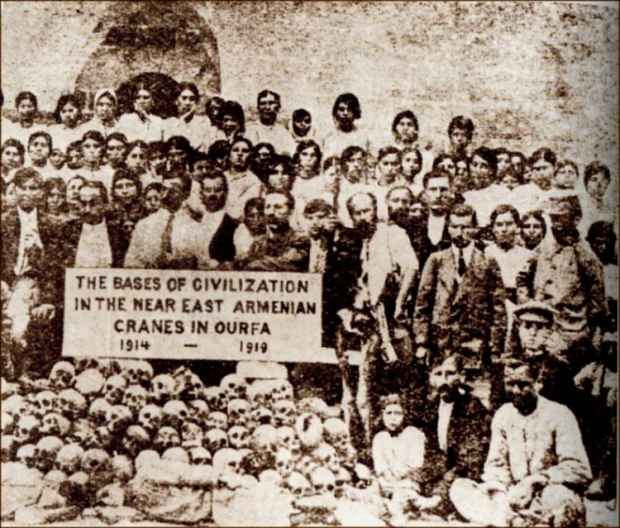
Well if this is not enough the entire picture of ethnic clashes and liberty curtailment is by and large much bigger. On one hand with Islamic dominion in the Turkish estate the Armenian fraternity is being pushed aside by the Turks. Armenia has been an obvious Turkish enemy since 1915 over a number of issues and this fight has turned ripe with sudden US support to the Armenian cause.


Armenia is a small country landlocked and even being a Russian ally it is surrounded by two anti Russian countries of Azerbaijan and Turkey. Turkey and Armenia never had a relationship of goodwill and trust. It began with during the end or closing of the First World War when ethnic cleansing was in progress and the entire Ottoman Empire was breaking up into nation states. A large chunk of Christian ethnic Armenian population that lived in countries like Bulgaria, Romania, Anatolia, Greece, Georgia, Azerbaijan were forcibly moved from their territories to foreign lands. Many of them were driven towards the southern Syrian deserts and left to die. Many of them slaughtered and butchered on large tracts of wastelands before they could make their way past Anatolia into Armenia.


All this came to be known as the Armenian Genocide of which Turkey still take no acceptance of carrying out.


It is widely acknowledged to have been one of the first modern genocides, as scholars point to the systematic, organized manner in which the killings were carried out to eliminate the Armenians. Indeed, the word genocide was coined in order to describe these events. It is the second most-studied case of genocide after the Holocaust.


The starting date of the genocide is conventionally held to be April 24, 1915, the day that Ottoman authorities arrested some 250 Armenian intellectuals and community leaders in Constantinople. Thereafter, the Ottoman military uprooted Armenians from their homes and forced them to march for hundreds of miles, depriving them of food and water, to the desert of what is now Syria. Massacres were indiscriminate of age or gender, with rape and other sexual abuse commonplace. Turkey however openly denies any such incident and openly says that nothing of that sort happened.


The latest Turkish-American rift over the Armenian question—after a congressional committee voted on March 4th to recognise the killings of 1915 as genocide—looks wider than some previous ones. It coincides with a general scratchiness between America and its ally. Turkey is reluctant to slap sanctions on Iran. Anti-Americanism is running high among Turks. Some suspect that Barack Obama retains his view (expressed as a senator in 2008) that “the Armenian genocide is not an allegation…but rather a widely documented fact.”


Still, the chances are that after a deep sulk, Turkey will send its ambassador back to Washington, and the administration will persuade legislators to avoid a vote in the full House, for fear of wrecking an important relationship—and worsening the fading prospects for reconciliation between Turkey and Armenia. A tired diplomatic ritual will play out once again.


Can any actor in this sorry drama do anything to improve the script? One day a Turkish leader will be statesman enough to see that national dignity is better served by acknowledging the sins committed on Anatolian soil than by suppressing debate and punishing truth-tellers. Such a leader could decouple relations with Armenia from Ottoman history. In any case the country that has lost faith of nearly all its allies is America itself.


America- Broke and mass murderer but not going strong anymore. Turkey is an important foothold because of its strategic position on the head of the globe and loosing it would cost the entire Caucuses.


Read more

Australia - Land of Racism??


The Australian image has been blemished by numerous stains of racism in the recent past. The reputation earned by Australia of a popular and responsible tourist destination and an education hot spot has taken a blow due to such repeated abominable incidents or more appropriately accidents.


The racist behavior of few Australian cricketers on the field towards some Indian players had once dominated the critic circle of the commentary world, and had tarnished the reputation of the then No. 1 cricket team in the world.

Though such cricketing incidents have taken a back seat in the present but these racist attacks on the Indians could prove to be the vicissitudes of fate for the global image of the land of kangaroos.


The foreign minister of Australia Mr. Stephen Smith had a mammoth of a task up his sleeves when he was on a long tour to the India and was engaged in the alleviation of the public angst over the racist attack on the Indian students studying in Australia. He has assured to bring the guilty to book. He has pledged whole hearted support to the family of the victims and has repeatedly emphasized the Australian policy of zero tolerance on racism.


If such racial maniacs are let loose then they could hamper the growth of a responsible and profitable relationship between the two countries. The Australian government has got to nip the people responsible for such attacks in the bud before they turn out to prove themselves to be the Frankenstein’s monster.


The strong bond between the two countries has as its supporting pillars – Trust and Responsibility. Few racial maniacs should not put the relationship between the countries in jeopardy. For who knows these maniacs could possibly turnout to be the Gen-next terrorist because after all like terrorists they too derive their roots from the sewer of race, caste and color based differentiation of people. This turn of events could have far reaching consequences on the relationships between the two countries.


Such accidents should not preclude the two nations from holding further talks, because we already have in front our eyes a live example of a political stale mate between two nations one of which, sadly, is our own country. The peace process between India and Pakistan is stuck into stalemate because of India’s persistent demand for Pakistan to take effective actions against the terrorist who are responsible for the Mumbai attacks and Pakistan’s consistent failure to do so. If events turn out to be sore and India had to put similar demands in front of Australia, we could not rule out the possibility of another stalemate.


The two nations have to build up an atmosphere of cultural and technical cooperation and hence to build a stronger and safer world and have to prevent any such iniquitous events from hampering the relationship between them.


All possible measures to curb such incidents are now mandatory to ensure the safety of Indian residents in Australia and hence are mandatory to enhance the positive growth of the region. The Australian foreign minister has take a head start in this direction by involving the Indian Australian businessmen  well settled in Australia to come forward and interact with the suffering Indian community and win them over again by making them trust the Australian government which has provided them always full support and protection.


We expect more such measures by the Australian government to clear itself of the blame it has received from the world community of being not able to ensure the safety of its residents and we should hope for the end of such racial attacks very soon.
 
Read more

LinkWithin

Related Posts with Thumbnails